Mastercraft Antioch Masonry and ConcreteMastercraft Antioch Masonry and Concrete

Foundation repair in Antioch CA - a repair that starts with why it moved

Cracked walls or doors that suddenly stick? We find out why your foundation moved, then plan a repair that deals with it.

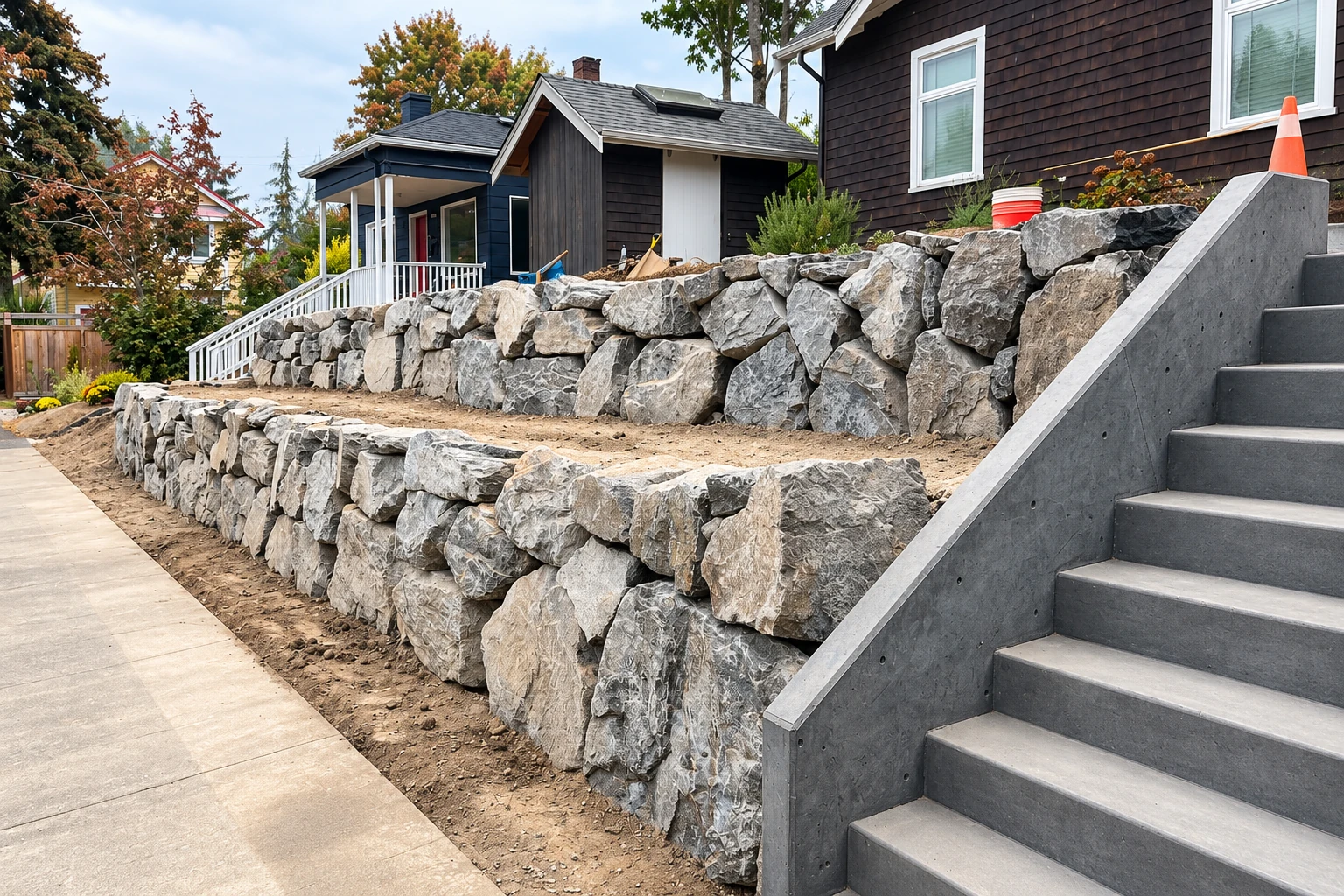
Tiered rough-stone retaining wall beside a concrete staircase, with unfinished soil and homes behind it.

Foundation repair in Antioch fixes a house that has settled unevenly, where one part sank more than another, by carrying the house down to firmer soil or lifting sunken concrete back up.

Why are my walls cracking and my doors sticking?

Uneven settling usually shows up as cracks in walls, stair-step cracks in brick or block, and doors or windows that won't open or close the way they used to. Take it seriously, because the same movement can lead to structural damage that leaves your house weaker against wind, earthquakes and the everyday load of living in it.

The price moves with what's causing the movement, how much of the house has settled, which repair fits, and how hard the spot is to reach. The schedule turns on whether an engineer needs to look first and whether the city wants a permit. Your written estimate spells out what we'll do and what we won't, so you know the scope before anything starts.

What a foundation repair plan usually includes

Most foundation jobs come down to finding out what moved, carrying the house on firmer ground, and keeping the soil from shifting again. Here's how each one usually works.

An engineer looks first

One Bay Area guide says settlement cracks, like stair-step cracks running through brick or block, need a licensed structural engineer's evaluation before any repair work. Plan on that as the first step, ahead of picking a repair method, because the method should fit what the engineer finds and not the other way around.

Piers that reach firmer soil

Helical piers are steel shafts screwed down past the soft soil, and they carry the weight of your house to deeper, stable ground. When it's a concrete slab that sank instead, slab jacking lifts it back up by pumping grout underneath, so the slab sits level again.

Drainage for milder cases

Not every house needs piers. In less severe cases, corrective grading, which means sloping the ground away from the house, and better drainage can help keep the soil moisture steady around the foundation, so it stops swelling and shrinking under one corner more than the rest.

What happens after you call us about your foundation?

Here's how a foundation job goes with us, from the first call to the walk-through, so you know who you'll talk to and what you'll have in hand.

  1. 1

    Call or send the form

    Call (925) 503-1025 or send the form, and add photos of the cracks and any door or window that no longer opens right. Most of the time it's me who gets back to you.

  2. 2

    I look and write it up

    I come out and look at the house myself, tell you what I see, and say plainly if an engineer should look before anyone picks a fix. Then I send a written estimate of what we'll do and what we won't.

  3. 3

    We get the work done

    If you go ahead, we handle any permit and line up the inspections. I'm on site with our crew while the work gets done, so the person who looked at your house is the one watching the repair go in.

  4. 4

    Walk the finished job

    When the work is finished, we walk it with you, show you what went in and answer your questions. If brick or mortar cracked along with the foundation, we can talk about fixing it now that the house is steady.

Request an estimate

How we handle foundation repair

Cracks and sticking doors can come from a lot of things, so I look first and tell you straight when a structural engineer should see the house before anyone picks a fix. What we won't do is start by patching the cracks. Patching before the movement has a plan just wastes your money, because cosmetic repairs only hold once the movement is dealt with, and until then the same cracks come back.

Once the house is steady, the brick and mortar that cracked along with it is the kind of work we're known for. Stair-step cracks in a brick wall usually run through the mortar joints, and tuckpointing, raking out the cracked mortar and packing in fresh, closes them back up. If the movement reached the chimney, chimney repair waits for the same reason, until nothing under it is still moving.

Sometimes the truth is a smaller job than you braced for. A thin crack from concrete shrinking as it cured isn't the house moving, and if that's what I see, I'll say so instead of selling you piers. I'd rather you call us back for real work later than pay for work your house doesn't need.

Grout to lift a slab

Mudjacking pumps a grout mix under a sunken slab to raise it. One guide puts its cure at 24 to 48 hours before the area can be used, which is fine for a patio you can stay off for a couple of days.

Foam to lift a slab

Polyurethane foam goes in the same way but sets fast, and the same guide says it's ready for traffic in about 15 minutes. If you need the driveway or walk back the same day, that's the one to ask about.

Get your foundation looked at and a written estimate

Send the form and you'll hear back within one business day. We'll set a time for me to come out for a free estimate at your property, and there's no pressure to book once you have it.

(925) 503-1025

team@antiochmasonryandconcrete.com

Foundation repair and the brickwork around it in Antioch

The city's Building Division issues building permits in Antioch. Its list of work that doesn't need a permit names most residential concrete flatwork, the flat concrete like walks and patios, and doesn't name foundation repair, so don't assume your job is exempt. The city asks you to call or email with questions about your project before you apply. When a job needs a permit, we pull it and line up the inspections, and if it's unclear, we check first.

One Bay Area guide says uneven settling is more common on expansive clay, the kind that swells when wet and shrinks when dry, found across much of the East Bay, and on homes built on fill. If you want to know whether your address sits in a mapped earthquake hazard zone, the state's EQ Zapp map will show you, or tell you the area hasn't been evaluated yet.

We're based in Antioch and work in the cities around it, from Concord and Walnut Creek out to Brentwood and Rio Vista, and we see the same cracked walls and sticking doors across all of them. If you're not sure we cover your address, call and ask.

Why Antioch homeowners call Mastercraft for foundation repair

I started out mixing mortar and hauling block for a small masonry crew, and I learned the trade from people who'd done it for decades. I opened this business in Antioch in 2023. I come out to look at every job myself, and I'd rather tell you a crack is nothing to worry about than sell you work your house doesn't need.

We're licensed and insured. The Contractors State License Board licenses contractors in California, so it's fair to ask anyone you're considering which license they hold. Our promise is simple. Satisfaction guaranteed on every job. If your doors are sticking or a crack keeps growing, call (925) 503-1025 or send us the form and I'll come take a look.

Chimney repair

When a house settles, the chimney can crack or start to pull away from the wall, and those cracks and gaps need repair once the movement is fixed.

Tuckpointing

Cracked or crumbling mortar joints let water into a brick wall, and replacing that mortar with fresh is how the wall gets its strength and tight look back.

Cities where we repair foundations

These are the cities with their own page on our site, and they aren't the only places we work. If your city isn't listed, give us a call and ask.

Foundation repair questions we hear in Antioch

How much does foundation repair cost in Antioch?

There's no single price, because the cost turns on what the engineer finds and which repair fits your house. A drainage fix or a lifted slab is usually a much smaller job than piers, and with piers the number and depth drive it. I'll give you a written estimate after I've seen the house.

Which pier type works for a single-story house?

Helical piers are usually the pick for a single-story house. Push piers depend on the house's own weight to drive them into the ground, and single-story homes, slab homes and crawl space foundations often don't have enough, which is why helical piers are standard on lighter houses.

How much can a contractor ask for up front in California?

Under the state licensing board's rules, a contractor can't ask for or take a down payment of more than $1,000 or 10 percent of the contract price, whichever is less. Any other payments have to be listed in the contract and tied to work already done or materials delivered to your house.

How do I get ready for a foundation inspection?

Make a short list of the doors and windows that stick and the cracks you've noticed, with roughly when each showed up. Clear room along the outside walls near them, and if a crack has been growing, a pencil mark at each end shows me how much.

How long does foundation repair take?

The time on site turns on the repair the plan calls for and how much of the house it covers, so I'll talk you through it once I've seen the house. An engineer's evaluation and any permit review add time before work starts, and a lifted slab needs its cure before you use it.

Get those cracks looked at before they grow

Call (925) 503-1025 or send the form, because a crack that keeps getting wider usually means the house is still moving, and the sooner you know why, the less it has time to damage.

(925) 503-1025Request an estimate